 Victor Ortega
 RIO GRANDE VALLEY – The Department of Education is seeking to establish loan limits for programs above the bachelor level, which requires a reclassification of degrees as part of President Donald Trump’s One Big Beautiful bill act.
The reclassification of degrees will place programs in different loan cap categories. As of now, professional degrees, which include graduate and doctorate programs, have seen borrowing limits of $200,000. However, according to a DOE press release, some programs could see their borrowing limit being lowered to $100,000.
The number of programs labeled as “professional degrees” would change as well.
The DOE’s new proposed consensus definition of “professional degrees” would include high-cost programs, such as medicine, dentistry and law while excluding programs that also require a license, such as nursing.
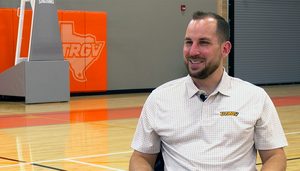
However, Reynaldo Anzaldua, a UTRGV Department of Informatics and Engineering Systems professor, said he thinks engineering and business programs could be affected.
“I know the nursing and medical fields are very much involved in trying to figure out how they’re going to work with this. On the Business side, I’m not hearing as much,” Anzaldua said.
With the potential decrease in loan caps, students entering the affected fields may need to seek alternative funding methods.
Anzaldua said students who are looking into research jobs could find it difficult to fund their graduate program.
“If you go into a very large organization, say, the U.S. government, Google, Facebook. If you have a doctorate, a PhD or a masters, you’ll end up doing a lot of research in those organizations,” Anzaldua explained.
The change in definition is being sought out by the DOE to “help drive down the cost of graduate programs and reduce the debt students have to take out.”
According to section 668 of title 43 of the Code of Federal Regulations, a professional degree proves both the completion of the basic academic needs to start work, and a level of skill higher than a bachelors’ degree.
A professional license is also generally required.
Anzaldua said his time in the military helped pay for his graduate education when he needed more funding.
“My concern with the students is, I’ll have to encourage them to find another funding source, like I had to do, with the military,” Anzaldua said.
According to the DOE, its data supports the changes, citing 95% of nursing students have borrowed below the annual limit.
The DOE has yet to release a definitive definition of “professional degrees.” For further updates, visit the KVAQ-TV website.