

 Perla Cortez
 EDINBURG – After the release of the sexual assault allegations against Cesar Chavez, UTRGV students have responded with disappointment upon an influential leader for the Hispanic community.
On March 18, the New York Times released testimonies of multiple women who came forward as sexual assault victims of Chavez after a five-year investigation.
Prior to the release, United Farm Workers released a statement regarding the allegations.
“As a women-led organization that exists to empower communities, the allegations about abusive behavior by Cesar Chavez go against everything that we stand for,” the statement reads. “These disturbing allegations involve inappropriate behavior by Cesar Chavez with young women and minors, they are shocking, indefensible and something we are taking seriously.”
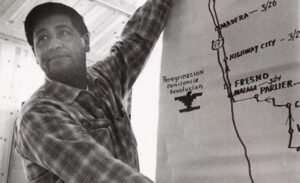
Cesar Chavez was an American-political activist for farmworkers and co-founded United Farm Workers, a collaborative foundation between Dolores Huerta, Larry Itliong and Philip Vera Cruz.
Chavez was known for his march from Delano, California, to Sacramento on foot to show lawmakers and the public about the mistreatment of Mexican American and Filipino farmworkers.
Out of 22 UTRGV students contacted, only a few agreed to partake in an interview to comment on the allegations. Half of the students who denied participation were not aware of the allegations or knew who Chavez was.
Aliana Flores, biology sophomore, said the influence of Chavez’s movement was a big part of her family, as she and her grandparents participated in an annual march held in San Antonio for farmworkers rights.
She adds although the allegations harm Chavez, the message of the movement should continue but also highlight the importance of Dolores Huerta and honor her courage.
“I can’t imagine, like, what type of trauma she must have been dealing with.” Flores said. “She knew that this was, you know, a problem that still had to be fought for even if she was dealing with those things. She’s definitely a strong woman for dealing with all of that and still fighting for farmworkers.”
Katie Ortega, integrated health science sophomore, agreed the message of the movement should stay alive. She said she believes Chavez was put on a pedestal prior and these allegations have humanized him.
“It’s kind of like, how far does this go, you know? Now, like after hearing all this, I feel like he’s definitely more humanized,” Ortega said. “It’s more seeing that he is really and truly just like all of us. And he makes mistakes, like all of us in that sense.”
Recently, La Union del Pueblo Entero (LUPE) shared a post on March 26 stating the organization values “the courage of survivors to speak out and value how and when to share their truths.”
It also stated it will continue to support the movement for Hispanics and spark a change for the future.